Where Do Local Artists Create Around Peggy's Cove? A Walk Through Our Creative Corners

You'll learn where Peggy's Cove artists set up their easels, which studios welcome visitors, and how our fishing village's dramatic granite coastline inspires the paintings, pottery, and photographs you'll find hanging in parlours across Atlantic Canada. This guide maps the creative spaces that locals frequent—the workshops behind weathered clapboard houses, the galleries tucked along narrow lanes, and the shoreline spots where you'll find someone capturing dawn light on the rocks.
Why Does Peggy's Cove Draw So Many Working Artists?
Walk the back roads of Peggy's Cove on any morning when the fog lifts, and you'll spot them—easels perched on granite outcrops, painters bundled in wool sweaters trying to capture that particular quality of light that bounces off the Atlantic and filters through sea mist. We're not talking about hobbyists with smartphones. These are working artists who've chosen Peggy's Cove as their base, drawn by something that's difficult to articulate but impossible to ignore.
The light here is different. Ask any painter in our community and they'll tell you about the way morning sun strikes the lighthouse from the east, or how afternoon shadows carve deep purples into the creases between rocks. The Peggy's Cove Preservation Area offers 65 hectares of protected coastline where the terrain hasn't changed in millennia—granite worn smooth by glaciers, then roughened again by salt spray and wind. That permanence matters to artists who work en plein air, battling the same weather and tides that local fishermen have navigated for generations.
There's also the matter of authenticity. Peggy's Cove isn't a constructed tourist destination—it's a working fishing village where roughly 40 residents live year-round. When artists paint here, they're documenting a real place where lobster boats still leave before dawn and the general store keeps irregular hours based on who's around. That genuine quality separates Peggy's Cove from more polished coastal destinations, and artists feel it immediately.
Which Studios and Galleries Can You Actually Visit?
DeGarthe Gallery sits on the main road through the village—impossible to miss, and you shouldn't. The late William deGarthe carved his granite sculptures on-site for decades, and his studio remains open to visitors who want to understand how one man's obsession with maritime life produced works now considered quintessentially Nova Scotian. The gallery doesn't just preserve deGarthe's legacy; it actively supports contemporary local artists with rotating exhibitions throughout the summer season.
Walk ten minutes toward the harbour, and you'll find smaller operations—artists who've converted sheds and back rooms into display spaces. These aren't formal galleries with posted hours. They're extensions of living rooms, open when someone's home and the weather's decent. That's part of what makes visiting them feel like you've been let in on something rather than processed through a tourism machine.
The Peggy's Cove Area Festival of the Arts runs each August, transforming private studios into temporary public spaces for two weekends. Last year, seventeen local artists opened their doors—from watercolourists working in spare bedrooms to metalworkers forging sculptures in repurposed fishing sheds. The festival maps are available at the Sou'Wester Restaurant and Gift Shop, and following the marked route takes you through parts of the village most tourists never see.
What Should You Know Before Visiting Artist Spaces?
First—respect the residential nature of Peggy's Cove. Artists here aren't running theme parks. If a sign says closed, it means closed. If a studio looks like someone's house, that's because it is. The unspoken rule in our community: look before you enter, listen before you speak, and never assume that because someone has paintings displayed, they're available for immediate sale or conversation.
Second—bring cash. Many Peggy's Cove artists operate on informal economies. Credit card readers require internet connections that falter during weather events, and besides, there's something about handing over folded bills for a piece of original art that feels appropriately traditional. Prices range widely—you'll find small sketches for forty dollars and large oils for several thousand. Don't haggle. The price reflects hours of work, materials, and the singular perspective that comes from sitting on these rocks through multiple seasons.
Third—ask about process, not just product. Artists in Peggy's Cove tend to be generous with their time if you're genuinely curious. Ask about the challenges of painting in wind that threatens to carry your canvas into the harbour. Ask about the particular blue that appears in Nova Scotian shadows—that's a conversation that can last twenty minutes, and you'll learn more about this place than any guidebook offers.
If you're serious about connecting with the local art scene, consider timing your visit with the Nova Scotia Artisans Festival, which occasionally features Peggy's Cove artists alongside craftspeople from across the province. Check the Tourism Nova Scotia events calendar for current listings. For historical context on the artists who've worked this coastline since the 1920s, the Art Gallery of Nova Scotia maintains an excellent collection of maritime paintings, many depicting scenes you'll recognize from walks around our village.
Where Do Artists Actually Work Along the Shore?
The most productive painting spots aren't necessarily where you'd expect. Yes, the lighthouse offers an iconic view—but that's precisely why most local artists avoid it. Too many tourists, too little peace, and honestly, the composition has been done to death. Instead, watch where people carrying sketchbooks head on weekday mornings.
The granite slopes facing St. Margaret's Bay, about ten minutes walk southwest of the lighthouse along the coast, offer quieter vantage points. Artists settle here to capture the fishing boats returning with their catch, the village rooftops clustered below, and the distant outline of the Aspotogan Peninsula. Morning light hits these rocks around 9 AM—late enough that you don't need to be a dawn-chaser, early enough that the day's heat hasn't burned off the atmospheric haze.
William's Point—locals know it, maps don't mark it—juts into the Atlantic just beyond the main tourist zone. The trail there requires sturdy shoes and a tolerance for uneven ground, but photographers especially prize the low angles it offers on waves breaking against granite. On foggy days (and we get plenty), the point becomes surreal—sound dampened, visibility reduced to twenty feet, the world compressed into shades of grey that black-and-white photographers wait months to capture.
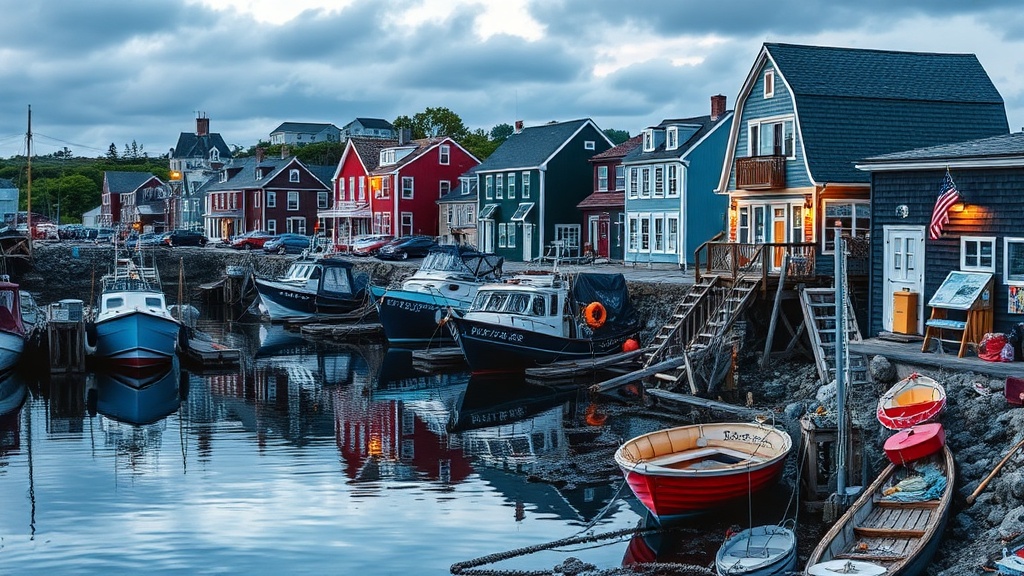
Back in the village proper, the wharf area offers different material—working boats, weathered faces, the physical labour of fishing rendered in rope and rust and salt-stained wood. Artists sketching here tend to work quickly, capturing gestures and impressions rather than detailed studies. The fishermen are used to being observed, but a respectful distance matters. This is their workplace, not your backdrop.
For those interested in the technical aspects of coastal painting, the Canadian Art Magazine has published several profiles of Nova Scotian artists working in the plein air tradition. The techniques discussed—managing quick-drying acrylics in ocean wind, the particular challenge of capturing moving water—reflect daily realities for artists working around Peggy's Cove.
How Can You Support Peggy's Cove Artists Year-Round?
Buying original art is the obvious answer, but not everyone travels with gallery budgets. Smaller gestures matter too. Many Peggy's Cove artists maintain Instagram accounts where you can follow their work—engagement costs nothing and helps them reach wider audiences. Share their posts when something resonates. Word-of-mouth remains powerful in communities our size.
If you do purchase work, ask about the story behind it. Most pieces created here carry specific references—the particular shape of a rock formation, the weather on a certain Tuesday, the fishing boat that belongs to someone the artist knows by name. That context transforms a decorative object into a genuine connection with this place.
Consider returning. The art of Peggy's Cove changes with seasons, with individual artists' development, with the slow evolution of a village that resists change more stubbornly than most. What you see in June differs from October's palette. The artist who had three paintings for sale in summer might have completed a major series by winter. Our community rewards repeated attention—there's always another layer to uncover, another studio door to knock on, another conversation about light and granite and the stubborn persistence of people who choose to create on the edge of the Atlantic.