What Locals Know About Peggy's Cove That Tourist Guides Never Mention

Why Most Descriptions of Peggy's Cove Miss the Point
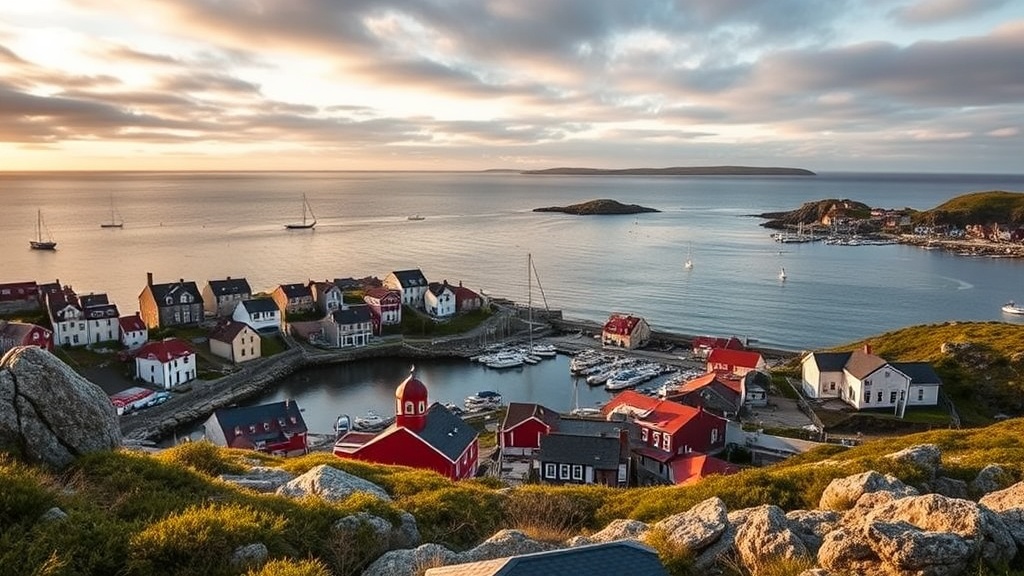
Most people think Peggy's Cove exists for the summer crowds—that we're a backdrop for photographs and nothing more. That misconception misses what actually happens here. We're a working fishing village with 30 year-round residents, families who've been here for six generations, and a community that functions long after the tour buses leave. This isn't a museum piece. It's our home.
Here is what life in Peggy's Cove actually looks like—from someone who lives it.
Where Do Locals Actually Eat When the Sou'Wester Closes for the Season?
The Sou'Wester Restaurant and Gift Shop on Peggy's Point Road is an institution, no question. But here's what guidebooks won't tell you: it operates seasonally, like most businesses here. When the season ends, we don't stop eating.
Many of us cook at home—fish from the morning catch, vegetables from gardens we've kept since the 1800s. Some head down Prospect Road toward Halifax for supplies. Others gather at homes along Peggy's Cove Road for community meals. The fishing families—Crooks, Garrison, Manuel, Morash—have kitchens that have fed dozens during storms. That's our actual food culture: not restaurant dining, but shared meals in houses built on stilts against the Atlantic wind.
What Happens to the Lighthouse When the Tourists Leave?
Peggy's Point Lighthouse doesn't switch off when the last bus departs. The light still operates every night, guiding vessels through St. Margaret's Bay as it has since 1868. For us, it's not a photo opportunity—it's a navigation tool we depend on.
During winter, the lighthouse compound becomes a different place. The accessible viewing platform (installed in 2021) sits empty. The granite rocks around it ice over. We watch from our windows as storms roll in off the Atlantic, waves breaking over the same breakwater that Hurricane Juan damaged in 2003 and Hurricane Bill nearly destroyed in 2009. The light keeps flashing. That's the Peggy's Cove we know: not the postcard version, but the working beacon in a January gale.
Is There Actually a School in Peggy's Cove?
The original schoolhouse built in 1839 is long gone, but education remains central to our community's story. Today's families make choices about schooling that reflect the reality of living in a village this small. Some children travel to nearby communities along Highway 333. Others homeschool, supported by the same independent spirit that built this place.
The history matters to us. That 1839 schoolhouse represented something crucial: six families of German descent who received 800 acres from King George III in 1811 believed education deserved a permanent building. They were farmers and fishermen who could barely spare the labor, yet they built it anyway. When we think about schooling in Peggy's Cove today, we're continuing that conversation about what a community owes its children—even when there are only a few dozen residents.
Where Do the Artists Actually Work?
William deGarthe carved his Fishermen's Monument into granite here in the 1960s, creating the sculpture that still depicts Peggy of the Cove watching over our fishermen. That work established something permanent: Peggy's Cove as a place where artists labor, not just a place they visit.
Today, the Spindrift Art Gallery at Six by the Sea continues that tradition. But the real artistic work happens in converted fish sheds along the wharves, in studios attached to homes on the narrow streets, in the Hags on the Hill building (the oldest house in St. Margaret's Bay, built 1812, now hosting 14 juried local artisans during season). The artists here aren't painting postcard scenes for tourists. They're documenting a disappearing way of life—lobster traps stacked on wharves, boats coming and going from the cove head, the particular light on granite at 5 AM when the fleet departs.
How Does the Fishing Industry Actually Work Here?
This is what matters most, and it's what tourism obscures. Peggy's Cove remains an active fishing village. From November through May, lobster fishing dominates daily life. You can see the traps—wooden ones near newer wire ones, the wire preferred because they're lighter—scattered along the roadside and wharves. The boats leave from the cove head before dawn.
The families doing this work have been here for generations. The same surnames appear in the 1811 land grant: descendants still fishing the same waters. They trade catch for supplies as their ancestors did, though now they use trucks on Highway 333 rather than boats. The lobster cannery that once operated here is gone, but the fishery remains—regulated, difficult, and absolutely central to who we are.
When you see fishing gear around Peggy's Cove, understand what you're looking at: not quaint decoration, but the actual tools of our primary industry. Respect the private wharves. Don't climb on the equipment. This is our livelihood, not a theme park.
What Is Six by the Sea and Why Did We Build It?
In recent years, Six by the Sea has transformed six historic homes in the village center into something new: Holy Mackerel (local artisan retail), the Spindrift gallery, Hunky Dory, and other enterprises supported by the Peggy's Cove Centre for Arts & Culture. It operates seasonally, April through October, and represents our attempt to sustain a year-round community in a place where the economy has always been seasonal.
The QR codes on each building tell the full story—from Mi'kma'ki, the ancestral territory, through the six German families who founded this settlement, to today. It's history tourism, yes, but it's also employment for locals who otherwise face a winter without income. The tension in Peggy's Cove has always been this: how to preserve what we are while surviving economically. Six by the Sea is our latest answer.
Where Do We Go When We Need Something Fixed?
Peggy's Cove has no hardware store. No grocery. No pharmacy. For everything beyond basics, we travel—typically to Halifax, 43 kilometers away on Highway 103, or to Tantallon for closer needs. The general store that once served this community (part of our self-sufficient 19th-century economy alongside the schoolhouse and post office) closed long ago.
This is the reality of hyperlocal life in a village of 30 people. We maintain extensive home supplies. We help each other—fishing families sharing equipment, tools, expertise. When someone's roof needs repair before winter, the community mobilizes. When the breakwater needs attention after storm damage, we work together. The Peggy's Cove Preservation Society, formed by locals passionate about community history, also functions as informal coordination for practical needs.
We don't call a service. We call a neighbor.
What Does Peggy's Cove Actually Mean to the People Who Live Here?
The name itself carries competing stories. The logical version: we're on St. Margaret's Bay, and Peggy is the diminutive of Margaret. The romantic version: a shipwreck survivor named Peggy married a local fisherman in 1800, became known as "Peggy of the Cove," and gave the village its name when she walked into the sea after her husband failed to return from fishing.
We don't choose between them. Both are true in their way. What matters is that we know both stories, that we pass them down, that we live in a place where history is immediate and contested. The Peggy's Cove Commission Act of 1962 protects 2,000 acres including our village because that history—material, built, lived—is worth preserving.
But preservation doesn't mean freezing in place. It means maintaining a working fishing village where children learn, artists work, and communities gather despite isolation, weather, and economic pressure. It means being honest about what we are: not a destination, but a home.
Resources for Understanding Real Community Life
For official community information and heritage preservation efforts: Peggy's Cove Living Community
For Six by the Sea seasonal hours and cultural programming: Six by the Sea Official Site
For Nova Scotia coastal safety guidelines and preservation area details: Safe on Shore Nova Scotia