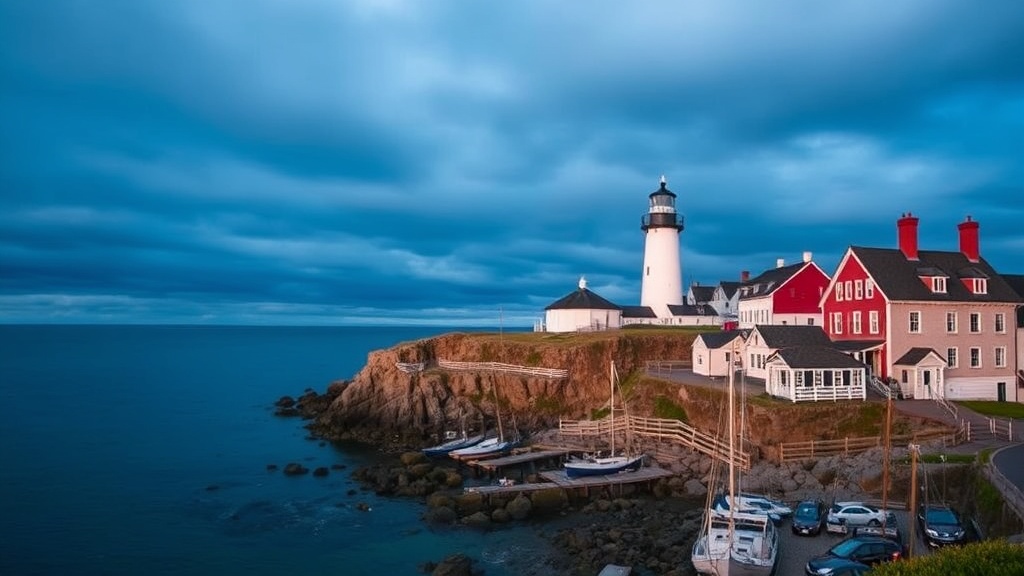
5 Community Landmarks That Shape Daily Life in Peggy's Cove

The Sou'Wester Restaurant & Giftshop
St. John's Anglican Church
The William deGarthe Memorial Monument
The Peggy's Cove Wharf
The Peggy's Cove Post Office
What This Post Covers (and Why You'll Care)
Living in a small fishing village means the landmarks around you aren't just pretty backdrops — they're the infrastructure of daily life. This post explores five community landmarks in Peggy's Cove that locals interact with regularly, from the places where we gather to the structures that keep our harbor running. Whether you've called Peggy's Cove home for decades or you're trying to understand how this village actually functions beyond the postcards, these are the sites that matter to our community.
What are the most important community landmarks in Peggy's Cove?
The five landmarks that genuinely shape daily life are the Peggy's Cove Lighthouse, the William E. deGarthe Memorial Monument, St. John's Anglican Church, the Community Hall and Post Office, and the fishing wharf. Each serves a practical function for residents while carrying deep significance for our village identity.
1. Peggy's Cove Lighthouse — More Than a Photo Backdrop
Yes, tourists flock here by the thousands. Here's the thing: the lighthouse (officially Peggy's Point Lighthouse) actually matters to locals too. Built in 1915, this octagonal tower still operates as a Canadian Coast Guard navigational aid — you'll see its characteristic red light flashing every few seconds during evening hours.
For fishermen heading out before dawn, that beam isn't decorative. It's a reference point. Locals use "the light" as a natural compass when giving directions — "past the light," "down from the light," "park by the light." The helicopter pad adjacent to it serves as an emergency landing zone, which matters when the nearest hospital is in Halifax.
The catch? Summer traffic transforms the area around the lighthouse into something unrecognizable to most residents. From October through May, though, you'll find locals walking their dogs along the rocks, kids exploring tide pools, and fishermen repairing gear nearby. That said, even during peak tourist season, the lighthouse remains functional infrastructure — not just a prop for vacation photos.
2. William E. deGarthe Memorial Monument — Where Art Meets Identity
Carved directly into a 30-meter granite outcrop behind his former home, this memorial sculpture depicts 32 figures representing the fishing families of Peggy's Cove. deGarthe — a Finnish-born artist who made Peggy's Cove his home — worked on this piece from 1977 until his death in 1983. It's unfinished (he completed only 16 of the 32 planned figures), but that somehow makes it more poignant.
Locals don't just visit this monument — they maintain it. The Peggy's Cove Area Association oversees preservation efforts. School groups from Shatford Memorial Elementary and nearby communities visit regularly. For residents, the monument serves as a tangible reminder of why this village exists: fishing families who've endured here for generations.
The granite faces represent real people — or composites of real families. You'll spot the fisherman in oilskins, the woman mending nets, children playing. It's not abstract art. It's documentation. Worth noting: the site sits on private property but remains open to the public, a arrangement that requires ongoing community stewardship.
3. St. John's Anglican Church — The Village Living Room
This small wooden church, built in 1894, sits on a hill overlooking the harbor. Its white clapboard exterior and modest steeple appear in approximately half the photographs ever taken of Peggy's Cove. But for locals, St. John's functions as community infrastructure beyond Sunday services.
The church hosts funerals for village families who've lived here for generations. It provides meeting space when the Community Hall is booked. During storms — when Peggy's Cove gets battered by Atlantic weather — the building serves as an informal gathering point. Its basement has housed emergency supplies, and the parking lot becomes a staging area for search and rescue operations.
You don't need to be Anglican — or religious at all — to appreciate what this building means to daily life. When someone in Peggy's Cove needs support (a death, a house fire, a medical crisis), St. John's often becomes the coordination center. The current minister knows most residents by name, including those who never attend service.
4. The Community Hall and Post Office — Administrative Heart
These adjacent buildings on Peggy's Cove Road handle the practical business of village life. The Community Hall — a modest structure that resembles a scaled-down schoolhouse — hosts everything from council meetings to wedding receptions. If you need to vote in a federal election, this is where you go. If the village holds an emergency preparedness session, this is the venue.
The post office next door operates on hours that puzzle outsiders — limited windows, closed weekends — but locals know the rhythm. This isn't a full-service facility; it's a rural post office serving fewer than 50 permanent residents. That said, it's vital. Many residents maintain mailing addresses here even if they spend winters elsewhere. The postmaster knows who gets what mail and often holds packages for neighbors without formal protocols.
| Facility | Primary Function | Hours/Access | Who Uses It |
|---|---|---|---|
| Community Hall | Gatherings, voting, meetings | Booked events only | Residents, fishing families, community groups |
| Post Office | Mail service | Weekday mornings, limited hours | Permanent residents, seasonal property owners |
| St. John's Church | Worship, community support | Sundays + events | Anglican congregation, all residents during crises |
| Fishing Wharf | Commercial fishing operations | 24/7 (seasonal) | Licensed fishermen, gear suppliers |
How do local landmarks support the fishing industry in Peggy's Cove?
The fishing wharf and associated infrastructure directly enable the commercial fishing operations that remain Peggy's Cove's economic foundation. The wharf provides mooring for lobster boats, storage for traps and gear, and access to buyers and processors.
5. The Fishing Wharf — Where Work Actually Happens
Tourists photograph the colorful boats. Locals depend on them. The wharf at Peggy's Cove — a working fishing facility managed by the Department of Fisheries and Oceans — handles lobster, groundfish, and other catches from boats registered to local fishermen.
During lobster season (roughly December to May in this region), the wharf operates as a small commercial hub. Fishermen unload catches. Buyers arrive with trucks. Gear gets repaired, bait gets distributed, licenses get discussed. The adjacent fish shed — a weathered structure that tourists sometimes mistake for abandoned — stores equipment worth tens of thousands of dollars.
If you live in Peggy's Cove, this wharf affects your daily life even if you don't fish. The income it generates supports the general store, maintains roads, and funds community initiatives. When weather prevents boats from leaving, you'll notice — fewer trucks, quieter mornings, anxious conversations at the post office. The catch? Tourism revenue gets more attention, but fishing still employs more Peggy's Cove residents per capita than hospitality.
Which landmark matters most to Peggy's Cove residents?
Ask five locals and you'll get five different answers — but the lighthouse and fishing wharf consistently top informal polls. The lighthouse represents Peggy's Cove to the outside world (and generates tourism revenue that benefits the village), while the wharf represents what Peggy's Cove actually is: a fishing community that happens to be picturesque.
The deGarthe Memorial holds special significance for multi-generational families. St. John's matters deeply to older residents. The Community Hall becomes important when you need to organize something. That said, most locals would struggle to rank them — these landmarks function as a network, not a hierarchy. Remove any one of them and daily life in Peggy's Cove would change noticeably.
Worth noting: all five landmarks face challenges. Coastal erosion threatens the lighthouse's foundation (the Coast Guard has stabilized the ground, but long-term relocation discussions continue). The fishing wharf needs regular maintenance that funding doesn't always cover. The Community Hall requires roof repairs that the village struggles to afford. St. John's congregation ages while younger residents move to Halifax for work. These aren't museum pieces — they're working infrastructure facing real pressures.
For residents, these landmarks form the vocabulary of daily life. "Meet me at the hall." "Down by the wharf." "Past the church." You don't need a GPS in Peggy's Cove — you need these reference points. And you need them to keep standing.